Architecture is shaped by intention, precision, and the way a project interacts with its surroundings.
In this interview, the architect Andrea Pelati shares the principles that guide his practice, his approach to projects, and the role that openness, light, and spatial continuity play in his work. His perspective offers valuable insight into how contemporary architects are rethinking the boundary between interior and exterior.
Vitrocsa : How would you describe your approach to architecture? Are there principles that guide your work?
Andrea Pelati : At our studio, we begin each project with a careful study of the site and the programme. We identify the qualities of the place, the key elements of the programme and how to enhance them, and who the future residents or users will be. Once these foundations are set, we imagine different scenarios and develop the project holistically, taking into account regulatory, construction, and energy-related aspects.
Our thinking is guided by the quality of life and usability the future building will offer. We seek simple solutions and a clear layout, characterised by a certain sobriety in spaces, materials, and details.
V : In what context did you discover Vitrocsa, and what convinced you to integrate our systems into your work?
A.P. : I have known the Vitrocsa brand for a long time, as I come from the same region where the company was founded. Thanks to this geographic proximity, I naturally became familiar with the company even before completing my architectural training.
The product has always interested me for its finesse. We had already used various minimal window systems, but aside from a renovation project in Yverdon in 2008, the opportunity to work with Vitrocsa on a full project came in 2018, for a villa on the Neuchâtel lakeshore.
V : Could you tell us about a project where Vitrocsa systems played a key role in the design?
A.P. : This villa on the Neuchâtel lakeshore, precisely. It is located in the heart of the vineyard, on a steep slope overlooking Lake Neuchâtel. The monolithic construction refers to the retaining walls typical of the region. On the south side, however, the façade is entirely glazed and opens onto the vineyard, the lake and the Alps. The sculptural quality of the house is reinforced by a wide cantilever extending above the garden, adding dynamism to the mineral volume embedded in the ground. The large picture window using Vitrocsa minimal windows with an invisible frame blurs the line between inside and outside, creating the impression of a continuous space projecting into the magnificent panorama.
V : Do you ever start from a technical detail when structuring a space?
A.P. : The main technical challenge was to build the 6-metre cantilevered roof. We collaborated with Estructuras Singulares, who designed a concrete roof eliminating all columns except one along the glazed façade. This bold structural decision was essential to the project’s success, as it allowed us to maintain a clean, open aesthetic while perfectly framing the view.
V : What does the phrase “When indoors and outdoors become one” evoke for you?
A.P. : The relationship between inside and outside is essential in our work. Since our very first project, we have sought to overcome the visual boundary created by a window frame. In residential projects, for example, we often try to make these limits disappear, offering living spaces that extend outward. The feeling of fully living within one’s environment, visually experiencing each season, whether stormy or radian, is a way to connect with nature and the passing of time.
V : How do you view the future of residential architecture? Do you see emerging trends?
A.P. : With the scarcity of available land and the desire to densify buildable areas, the transformation and extension of existing buildings will become increasingly important, while access to individual housing will become more limited. Such projects will likely become exceptional objects. That said, I imagine an intermediate form of housing will develop, combining the qualities of individual homes with a certain density, offering unique high-quality living spaces.
Beyond any trend, I believe ecological aspects; both energy performance and the use of more sustainable materials, are essential drivers of evolution in the construction field.
V : Is there a type of space or project you dream of designing one day?
A.P. : In addition to residential projects, which are an extraordinary field of expression, I would be very interested in developing a museum or a contemplative space. Working with entrance and exhibition areas, defining the relationships between the spaces themselves and how they connect with the outside must be fascinating.
This interview highlights a thoughtful architectural approach focused on quality of use, constructive clarity, and the relationship to the landscape. Vitrocsa systems naturally find their place within this approach, helping to dissolve visual boundaries and open new possibilities for design.
We thank his team as well as Andrea Pelati for his insightful perspective and for the trust he places in Vitrocsa in his projects. We look forward to continuing this dialogue between technology, architecture, and landscape.
In May 2024, construction began on our new headquarters. After 18 months of work, the building is now complet, a major milestone that perfectly embodies the essence of Vitrocsa: innovation, minimalism, and transparency.
Located in Y-Parc in Yverdon-les-Bains Switzerland, this new site brings all our activities together under one roof and was designed to foster creativity, efficiency, and collaboration. From the foundations to the installation of our own systems, every detail was conceived to reflect the identity of the brand.
This project marks a new phase in the company’s development. Our partners around the world are already praising this new tool, which strengthens the image and vision of the parent company.
The building also incorporates sustainable technologies, including:
Energy piles for geothermal heating.
A photovoltaic roof providing full energy autonomy.
Discover 18 months of construction
We are currently in the installation phase and look forward to revealing the interior of this new space soon. In the meantime, discover the evolution of the project through our timelapse video, retracing each stage of the construction.
Every architectural project presents its own set of challenges : extreme climates, marine environments, or unique topographies. That is why Vitrocsa systems are designed to adapt to any situation, maintaining the same commitment to performance and aesthetics.
Thanks to high-precision engineering, Vitrocsa systems offer total creative freedom, enabling architects to express their vision without compromising on design, comfort, or durability. As shown in the three projects featured here, from resisting intense cold to maintaining minimal lines in a saline environment or blending seamlessly into a dense urban context, each system adjusts to the specific needs and climate of the project.
This tailor-made approach embodies the essence of Vitrocsa : combining innovation, elegance, and technical mastery to harmonize architecture and environment, anywhere in the world.
Designed by Brazilian studio MK27, The Flag House rises to a unique challenge: recreating the fluidity of tropical spaces in an alpine setting with harsh winters. Resting on snow like a suspended glass box, the house opens generously to nature.
With 102 glass panels some reaching 4.3 meters in height, mainly featuring Vitrocsa Fixed and Sliding systems, the residence offers breathtaking panoramic views. A 2.7-meter Pivoting window completes the ensemble, reinforcing the project’s signature: controlled transparency serving exceptional thermal comfort.
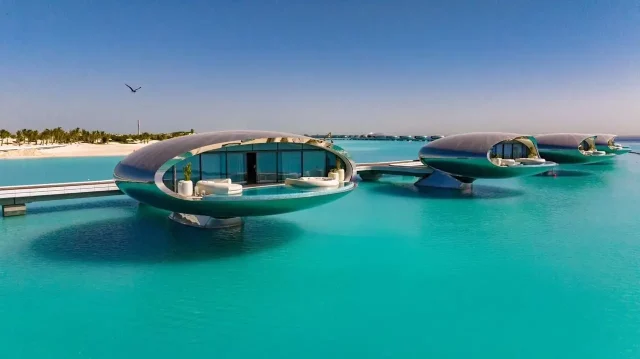
Shebara Resort par Killa Design | photo fournie par Glassline
On a series of uninhabited islands, Shebara Resort redefines the idea of sustainable luxury. Each villa, shaped like a pearl reflecting the sea and sky, combines organic architecture with technological innovation. The motorized Curved Vitrocsa windows open smoothly to the outside, enhancing the feeling of total immersion in the marine landscape. The project embodies a rare balance between avant-garde design, environmental responsibility, and technical excellence.
In the heart of Manhattan, Jardim is an oasis of greenery and serenity by Brazilian architect Isay Weinfeld. Two towers connected by a central garden open widely to the city through 195 Vitrocsa Fixed and Sliding windows ranging from 2.6 to 3.35 meters in height. The minimalist profiles fade away in favor of natural light, offering residents a unique sense of openness and privacy within the dense urban context of New York.
Want to learn more?
Our team, or one of our certified partners, is available to answer your questions and help you select the system best suited to your needs, your project, and your local climate.
Discover each system in our showroom: contact us to arrange a visit.
The Vitrocsa Pivoting System was designed to push the limits of architectural openings. Combining minimalist elegance with high-precision Swiss engineering, it creates fluid and spectacular spaces while guaranteeing outstanding performance and durability.
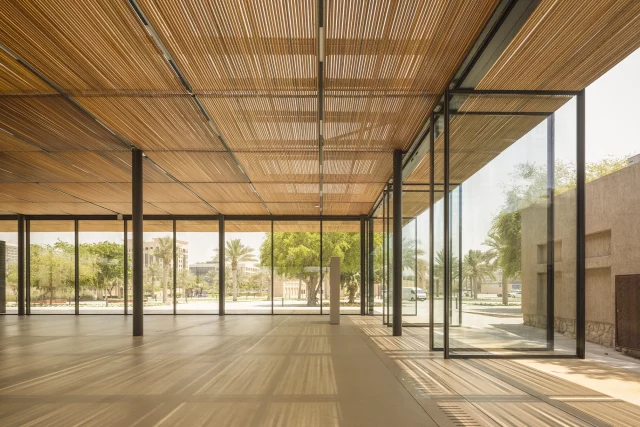
Shindagha Welcome Pavilion in Dubai by X Architects
A technology inspired by Swiss watchmaking
Every component is designed to remain visually discreet while ensuring perfectly balanced and smooth movement.
The patented pivoting axes and high-precision bearings offer unmatched ease of use, even for panels weighing several hundred kilograms.
Design and manufacturing are fully carried out in Switzerland, in the pure tradition of micromechanics and Swiss Made quality.
Exceptional dimensions
The Vitrocsa system makes it possible to create monumental openings up to 12 m² and 600 kg per panel, while maintaining the brand’s signature slim profiles and visual lightness.
This technical achievement offers architects complete freedom of design, without compromising aesthetics or performance.
6 meters high and 2.20 meters wide pivoting window in Vitrocsa’s new headquarters
Flexibility for every project
The Vitrocsa Pivoting System is available in several ranges, ensuring perfect integration in any architectural context:
V56: for infinite surfaces and outstanding technical performance
TH+: for areas requiring enhanced thermal insulation
3001: the original range (created in 1992), designed for warm climates, combining lightness and efficiency
Want to learn more?
Our team or one of our certified partners is available to answer your questions and help you choose the best system for your needs, project constraints, and local climate.
We invite you to explore our project gallery showcasing some of our most emblematic achievements.
Experience the Pivoting system in our showroom: contact us to arrange a visit.
Combining technical performance and architectural elegance, this is the challenge met by the VitrocsaGuillotine system. Designed to push the boundaries of possibility, it offers spectacular openings that integrate seamlessly into all types of projects.
The guillotine frames achieve exceptional heights without compromising aesthetics or quality. Whether for vast glass façades, monumental halls, or exclusive residential spaces, they open the door to unique architectural creations.
Strength and lightness combined
Each sash can support up to 500 kg – or even 1000 kg on request – while remaining perfectly balanced. Thanks to precision engineering, the movable sashes can be operated with just a light push, manually or motorized.
Unique flexibility in configurations
The Vitrocsa Guillotine system adapts to every project with two operating principles:
Two identical counterbalanced sashes: an elegant and fluid solution.
Side counterweights integrated into the finishes: offering infinite possible configurations.
This flexibility allows architects and designers to create spectacular openings, perfectly suited to both private and public spaces.
Vitrocsa transparency and design
True to Vitrocsa’s DNA, the Guillotine system retains the same fineness, minimalism, and transparency as our other solutions. Even on a very large scale, light and view remain the true protagonists.
Want to learn more? Our team or one of our certified partners is available to answer your questions and help you choose the best system for your needs, project constraints, and local climate.
Experience the Guillotine system in our showroom: contact us to arrange a visit.
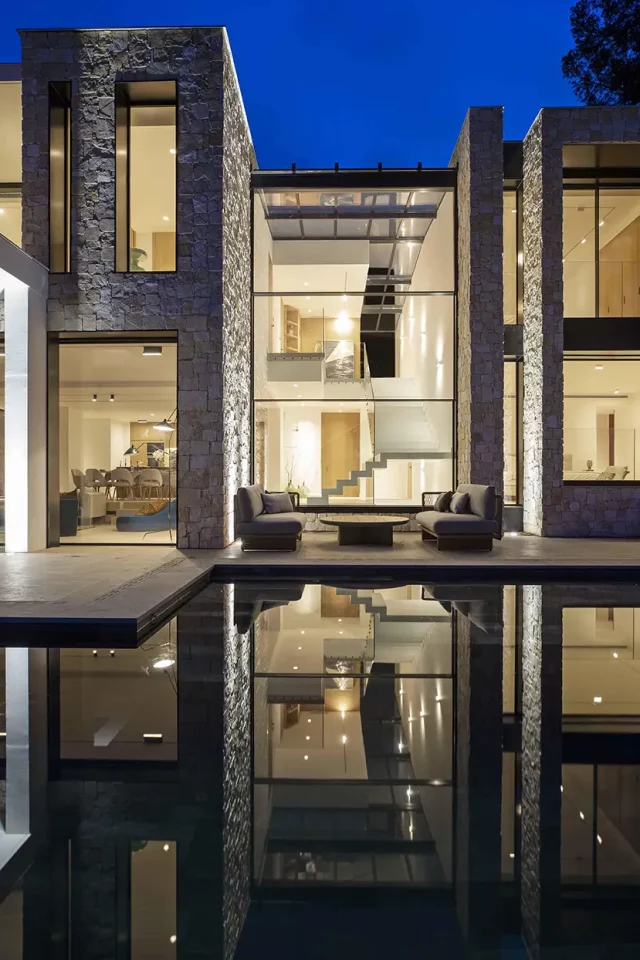
We are delighted to share our recent collaboration with The Local Project on the Vertical Courtyard House, the private residence of architect David Montalba, located in Santa Monica Canyon, California.
Designed as a retreat for his family, this exceptional home perfectly embodies Montalba’s architectural vision: dissolving the boundaries between inside and outside through a refined interplay of light, natural materials, and transparency.
At the heart of the project, a three-story vertical atrium floods the home with natural light and connects every living space. The expansive Vitrocsasliding glass walls integrate seamlessly into the architecture, allowing the interiors to open fully onto the gardens and the surrounding landscape.
The architect highlights the importance of this choice: “We needed the right product to allow the windows to disappear into the architecture and create a seamless continuity. Vitrocsa was certainly able to make that possible.”
At Vitrocsa, every technical detail is designed to serve architecture. The invisible frame is one of the most striking examples. Combining innovation, elegance and accessibility, it radically transforms the perception of space by removing all boundaries between inside and outside.
The frame is concealed beneath the floor finish (wood, stone, tiles, etc.), creating perfect continuity between areas. The floor appears to extend seamlessly, creating a fully invisible framing effect.
The invisible frame is compatible with our TH+, V32 and V56 ranges, and is integrated by default with our Turnable Corner system. Thermally insulated, it offers the same performance as other Vitrocsa systems, regardless of the region or climate. Available with single or multi-track versions, it pushes Vitrocsa’s minimalist philosophy even further.
Want to learn more? Our team or one of our certified partners is available to answer your questions and help you choose the best system for your needs, project constraints, and local climate.
Experience the invisible frame in our showroom: contact us to arrange a visit.
The Turnable Corner system perfectly embodies Vitrocsa’s vision: to create spaces where indoors and outdoors become one. This system allows panels to slide into corners and then nestle parallel to one another in a pocket or along a wall, creating a completely unobstructed opening. The result: the glass façade transforms into an uninterrupted panoramic view, and the architecture fades into the landscape.
This system offers a unique solution to the need for spatial flexibility, aesthetic minimalism, and sensory connection with the environment. By removing visual obstacles, it allows volumes to be reconfigured, perspectives to be expanded, and natural light to be enhanced. Originally developed in response to a request from architect Norman Foster of Foster + Partners, the Turnable Corner gives architects expressive freedom to design spaces that breathe openness and fluidity.
Vitrocsa excellence in every detail
Designed to meet the highest Swiss standards, the system combines finesse, strength, and elegance.
Ultra-slim frame: only 22 mm thick profiles.
Swiss precision bearings ensure smooth gliding operation is intuitive and gentle, and the panels are effortlessly stored to the side.
Large dimensions: up to 6 m² and 250 kg per panel, depending on the glazing
Maximum discretion: equipped with an invisible frame, the transition between inside and outside is seamless.
Projects that speak for themselves
From contemporary seaside villas to residences nestled in natural or urban settings, and even restaurants among the vineyards, the Turnable Corner enhances the beauty of every space. Around the world, it becomes a bridge between architecture and nature, between innovation and Swiss craftsmanship.
To learn more about the Turnable Corner system, we invite you to explore our project gallery showcasing some of our most emblematic achievements. Want to experience it in person? Book a visit with our team or one of our certified partners to tour a fully equipped showroom.
At Vitrocsa, we have reimagined the window as a true architectural tool. For over 30 years, we have been innovating to offer minimalist window systems that combine aesthetics, performance, and seamless integration into spaces. Here are 5 essential things to know about our solutions.
A Pioneering System Since 1992
Vitrocsa originated the minimalist window concept. Founded in Switzerland by Éric Joray, the company developed the first ultra-thin profile system, inspired by the micromechanical expertise of watchmaking. Since then, Vitrocsa has continuously innovated, with components manufactured in-house, specifically designed for optimal precision and durability.
Invisible Aesthetics
Vitrocsa’s signature is a clean and integrated aesthetic. Our profiles can measure as little as 18.5 mm, with frames concealed within walls, floors, and ceilings. The result? Maximum transparency, enhanced natural light, and a seamless connection to the surrounding landscape.
Systems Adapted to Each Project
Sliding, pivoting, guillotine, curved, open-angle, or invisible threshold: our solutions are tailored to the technical, climatic, or aesthetic needs of each project. Whether you’re building a mountain home, a seaside villa, or a cultural space, we have a custom solution.
Thermal Performance and Assured Comfort
The TH+ and V32 ranges ensure optimal thermal insulation, even in cold regions. They meet the strictest standards in terms of energy performance and water tightness (class 9A).
A Global Presence in Exceptional Projects
Chosen by leading international architects, Vitrocsa now equips iconic projects worldwide: private homes, luxury hotels, museums, pavilions… From the Flag House by Studio MK27 to the Shebara Resort by Killa Design, our windows are redefining the architectural experience.
At our construction site in Yverdon-les-Bains, a significant milestone has been reached: the installation of the main entrance, a Vitrocsa pivoting glass door measuring 6 meters high and 2.20 meters wide.
Designed as a bold architectural statement, this unique piece perfectly embodies Vitrocsa’s philosophy: combining minimalism, technical prowess, and elegance.
This monumental door integrates seamlessly into a façade designed to maximize transparency and natural light. With its integrated pivot system, it offers smooth movement and a spectacular visual impact.
Simultaneously, the installation of other windows is progressing rapidly, gradually shaping the lines of our future building, a space that reflects our commitment to design and performance.
We look forward to sharing more with you in the coming weeks.